
Advanced biological wastewater treatment — compact, efficient and reliable. High-efficiency MBBR & Turbo Bio-Reactor systems from CWG.



















Moving Bed Biofilm Reactor (MBBR) is an advanced biological wastewater treatment technology designed for high treatment efficiency, compact plant design and reliable operation. By combining the advantages of attached-growth and suspended-growth biological processes, MBBR provides excellent organic pollutant removal, improved resistance to shock loads and greater biological treatment capacity within a relatively small reactor volume.
Compared with conventional treatment systems, MBBR offers operational simplicity, flexible expansion and potential reductions in civil construction and maintenance costs.
MBBR technology uses specially engineered plastic biofilm carriers suspended in a continuously aerated biological reactor. These carriers provide a large protected surface area for beneficial microorganisms to grow and form an active biofilm.
As wastewater passes through the reactor, microorganisms consume and break down organic pollutants, reducing Biochemical Oxygen Demand (BOD), biodegradable Chemical Oxygen Demand (COD) and, with appropriate design, nitrogen compounds. Continuous aeration maintains oxygen levels and keeps the carriers in motion, ensuring effective contact between wastewater, air and microorganisms. Excess biofilm naturally detaches and is removed through downstream solids separation.
Effective BOD and biodegradable COD removal through concentrated biological activity.
Greater biological treatment capacity within smaller reactor volumes.
Stable attached-growth biomass withstands variations in organic and hydraulic loading.
Potentially reduces excess sludge generation under suitable operating conditions.
Standalone MBBR retains biomass on carriers without conventional return activated sludge.
Reduced dependence on complex biomass control and sludge-recycling arrangements.
Existing aeration tanks can often be upgraded with carriers, aeration and retention screens.
Treatment capacity can be increased through appropriate media and process upgrades.
The performance of an MBBR system depends significantly on the design and quality of its biological carrier media.
WOCK Biomedia is a specially engineered polymer-based carrier technology designed to maximize biological growth and treatment efficiency within MBBR and Turbo Bio Reactor (TBR) systems. Its high surface-area-to-volume ratio provides extensive protected space for microorganisms to attach and develop active biofilms.
The carefully designed polymer structure allows the carriers to remain suspended and continuously move within the reactor, improving contact between wastewater, oxygen and beneficial bacteria. For selected industrial applications, WOCK Biomedia incorporates industry-specific biocatalysts designed to support microbial attachment and biological treatment of different wastewater characteristics.
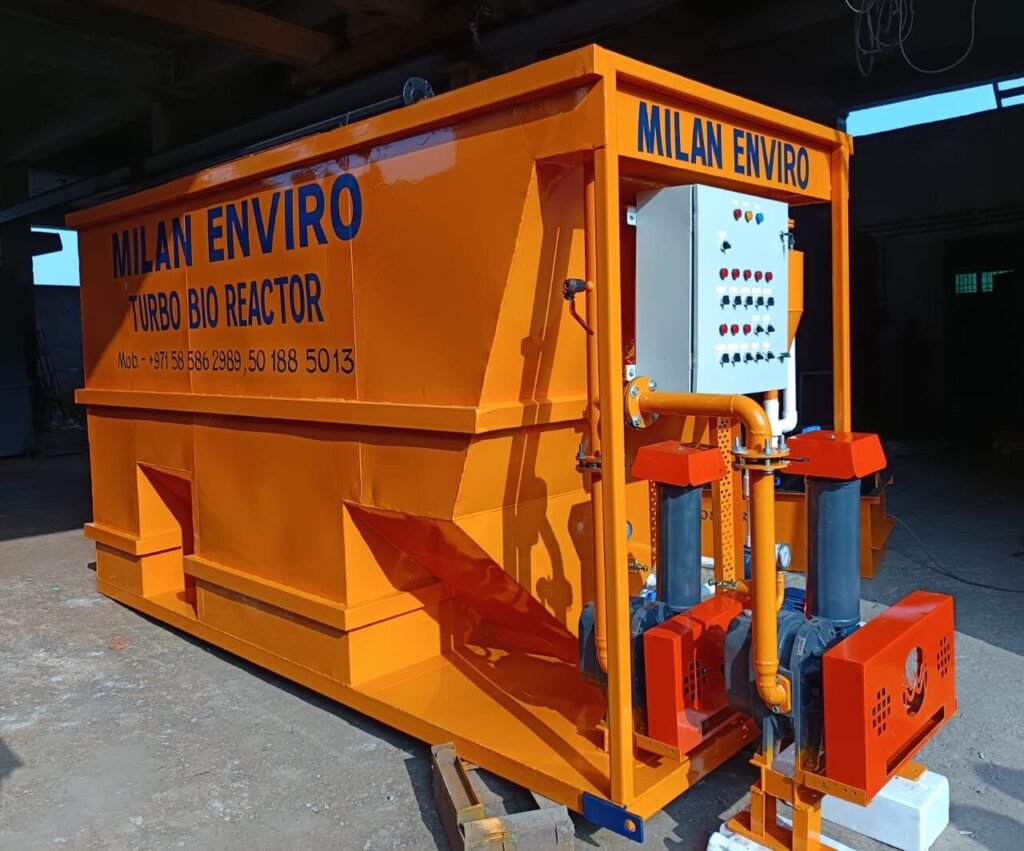
Turbo Bio Reactor (TBR) is an advanced MBBR technology integrating WOCK Biomedia, application-specific biocatalysts, engineered aeration systems and efficient reactor hydraulics. The technology combines attached biofilm growth with suspended biological activity to improve wastewater treatment performance.
Specially designed aeration grids maintain dissolved oxygen and keep the carrier media in continuous circulation. Media-retention screens prevent the carriers from leaving the biological reactor while allowing treated wastewater and detached biomass to pass into the next treatment stage. The integrated design supports higher biological loading, stable treatment performance, compact installation and reduced operating complexity.
Conventional Activated Sludge Processes rely on suspended microorganisms, secondary settling and sludge recirculation. MBBR retains active biomass on moving carriers, reducing dependence on sludge recycling and improving resistance to biomass washout.
Key advantage: higher biomass retention, improved shock-load resistance and the potential to increase biological capacity within existing tank volumes.
SBRs operate through controlled filling, aeration, settling and decanting cycles. MBBR typically operates continuously, allowing wastewater to move through the biological process without repeated batch-settling cycles.
Key advantage: continuous biological treatment, stable attached-growth biomass and straightforward integration into existing continuous-flow ETPs.
MBR combines biological treatment with membrane filtration to produce high-quality treated water, but membrane fouling, cleaning and replacement can increase maintenance and complexity. MBBR provides efficient biological treatment without relying on membranes within the reactor, although downstream clarification and filtration may still be required.
Key advantage: simpler biological operation and potentially lower maintenance where membrane-quality effluent is not required directly.
Conventional fixed-film systems use stationary media that may experience clogging or uneven distribution. MBBR uses continuously moving carriers, improving contact and oxygen distribution while reducing clogging risks.
Key advantage: improved hydraulic mixing, active biofilm renewal and flexible reactor operation.
MBBR combines high biological treatment efficiency, compact design, operational stability and flexible expansion within one reliable wastewater treatment technology. With advanced WOCK Biomedia and Turbo Bio Reactor (TBR) technology, the process can be further optimized through specialized carrier design, enhanced microbial activity and efficient aeration.
For industries seeking improved treatment performance, increased plant capacity and simpler long-term operation, MBBR offers a practical and sustainable solution.
Final system selection and performance depend on wastewater characteristics, treatment objectives and detailed engineering design.
Send us your wastewater analysis and flow rate — we’ll design the right MBBR or Turbo Bio-Reactor solution for your plant.