Complete industrial wastewater treatment solutions in Pakistan — MBBR, ETP, STP, Deck Float, advanced DAF, MBR, recycling and ZLD — designed, built, upgraded and serviced by CWG.












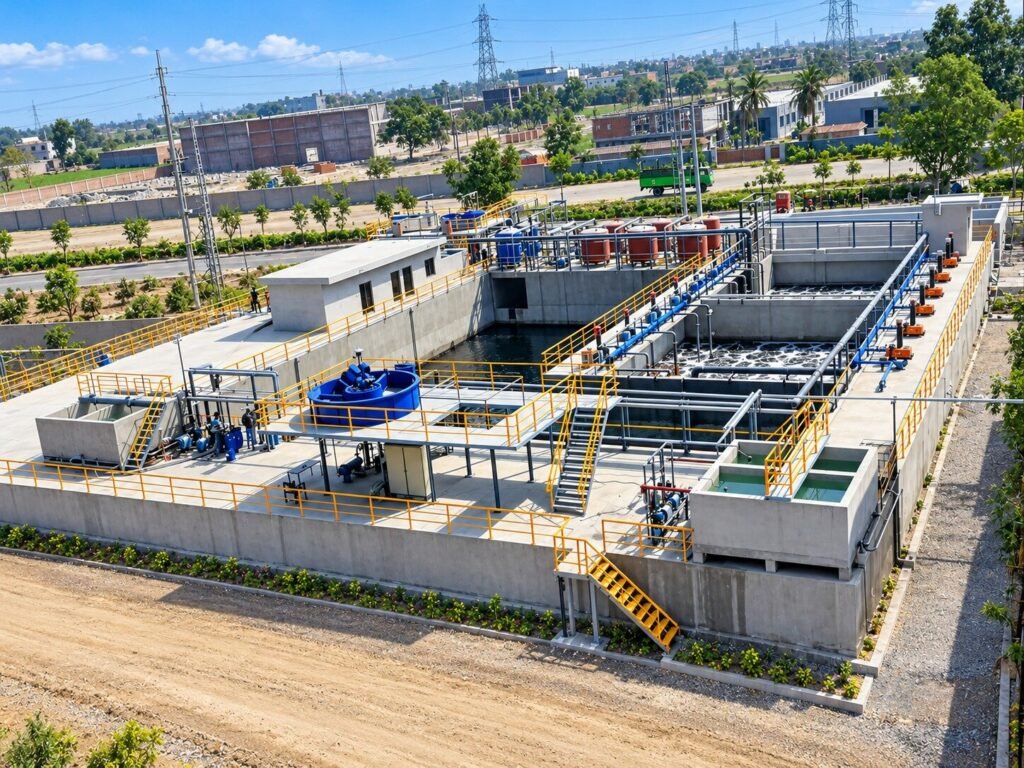
Wastewater treatment is not simply about installing equipment. A successful wastewater treatment plant must consistently treat the actual wastewater produced by a facility, handle changing loads, achieve the required treated-water quality and remain practical and economical to operate.
Since 1998, CWG Watch Water Technology has designed, built, installed, commissioned, upgraded and supported complete wastewater treatment plants for industrial, commercial and municipal applications across Pakistan — combining process engineering with fabrication, installation, commissioning, servicing and plant optimization.
CWG is particularly focused on three areas:
Moving Bed Biofilm Reactor is one of our core biological treatment capabilities — for new plants and upgrades.
Specialists in upgrading, troubleshooting and improving wastewater treatment plants that are not performing.
The most advanced clarifiers in the world — Deck Float and third-generation DAF systems.
Understand the wastewater. Identify the real problem. Then engineer the right treatment solution.
Every industrial wastewater stream is different. A textile mill does not produce the same wastewater as a food-processing factory, and a pharmaceutical facility does not have the same requirements as a beverage plant. Even two factories in the same industry can differ widely because of production, chemicals, raw materials, water use and operating conditions.
That is why CWG does not use one standard process for every project. Before recommending a wastewater treatment plant, we consider factors such as:
The objective is not to install the greatest number of technologies — it is to install the right technologies in the right order.
CWG specializes in MBBR wastewater treatment.
Moving Bed Biofilm Reactor technology uses specially designed carrier media moving inside an aerated biological reactor. Beneficial microorganisms grow as a biofilm on the protected surface of these carriers and break down biodegradable organic contaminants as wastewater passes through — allowing a large biological population to operate within a relatively compact volume.
For the right application, MBBR can offer important advantages such as:
For a new plant, MBBR can form the core biological stage of a complete ETP or STP. A complete process may include:
When an existing biological system is overloaded or needs more capacity, CWG can evaluate whether existing tanks and infrastructure can be used more effectively. Where technically suitable, MBBR can increase active biological treatment capacity while reusing existing civil structures — especially valuable where production has increased but available space has not.
We are experts in fixing, upgrading and troubleshooting plants that are not working as they should.
A treatment plant can underperform for many reasons — production may have increased, the wastewater may have changed, the biological process may be overloaded, aeration may be inadequate, chemical dosing may be incorrect, clarification may not remove enough solids, MBR membranes may foul repeatedly, RO feed may be poor, or the plant may simply have been designed around conditions that no longer exist.
The answer should not automatically be to replace everything. The first question should be:
What is actually causing the problem?
We study the existing system — treatment stages, tanks, pumps, blowers, aeration, clarification, chemical treatment, biological process, membranes, sludge handling and operating conditions — then understand the wastewater actually entering the plant today, which may be completely different from the original design basis.
Next we identify the real bottleneck. It may come from:
Existing infrastructure has value, so wherever possible we reuse existing tanks, equipment, biological capacity, MBR and RO rather than replacing the complete plant. Where an upgrade is needed, it may involve:
Our objective is not simply to add equipment — it is to make the wastewater treatment plant perform correctly.
Effective wastewater treatment often depends on removing contaminants before they reach expensive biological and membrane stages. CWG’s advanced offering includes Deck Float / DEK-FLOAT and third-generation DAF technology.
The most advanced clarifiers in the world, Deck Float, and third-generation DAF systems.
Deck Float combines flotation and sedimentation in a single unit, allowing the clarification stage to deal with both floatable and settleable solids — removing unnecessary load before it reaches sensitive downstream processes.
Remove unnecessary load before it reaches the aeration system.
Effective primary clarification can reduce suspended solids and organic loading entering the biological stage. Potential benefits include:
This is especially valuable when an existing plant appears to need additional biological capacity. Before making every downstream stage larger, the better question may be: can we first reduce the load reaching the biological system?
MBR and RO systems are valuable parts of a recycling plant, but their performance depends heavily on the quality of the water reaching them. By improving solids removal upstream, Deck Float provides cleaner feed to the membrane stages. Potential benefits include:
In suitable applications, Deck Float can reduce the solids loading reaching the membranes by up to 90%, subject to the actual wastewater characteristics.
Remove the load before it reaches the most expensive treatment stages.
Because Deck Float removes load before it reaches the expensive biological and membrane stages, it can reduce both the capital cost of new capacity and the running cost of the whole plant.
Potential CAPEX savings:
Potential OPEX savings:
Instead of increasing downstream treatment capacity, reduce the load reaching the downstream processes.
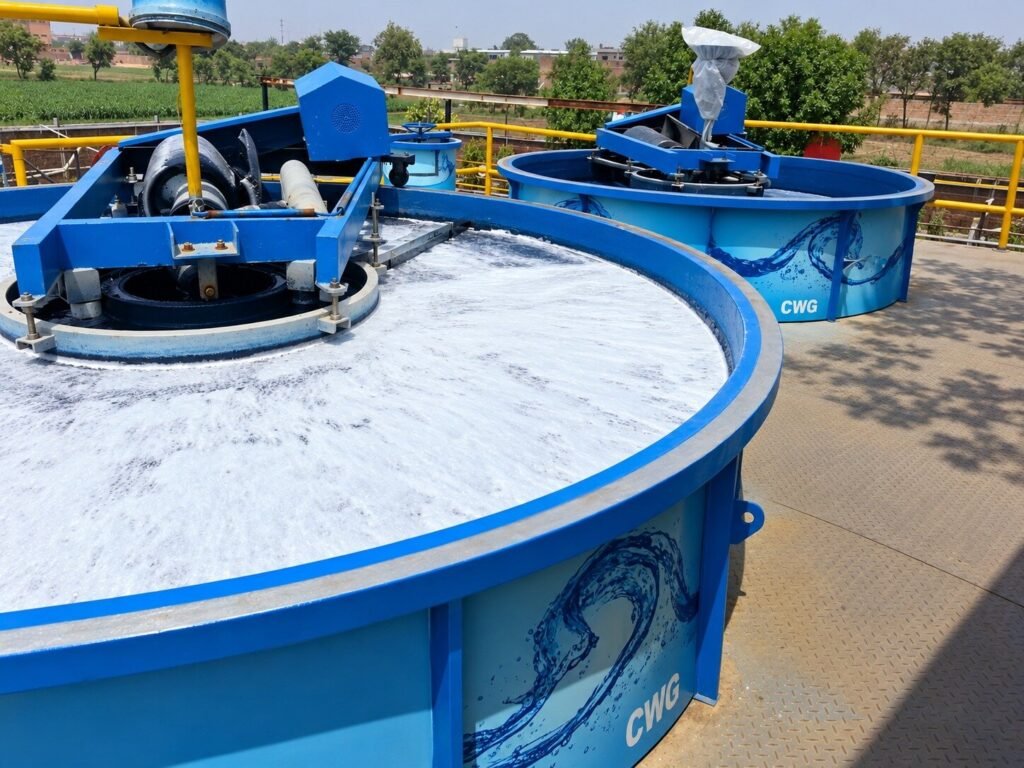
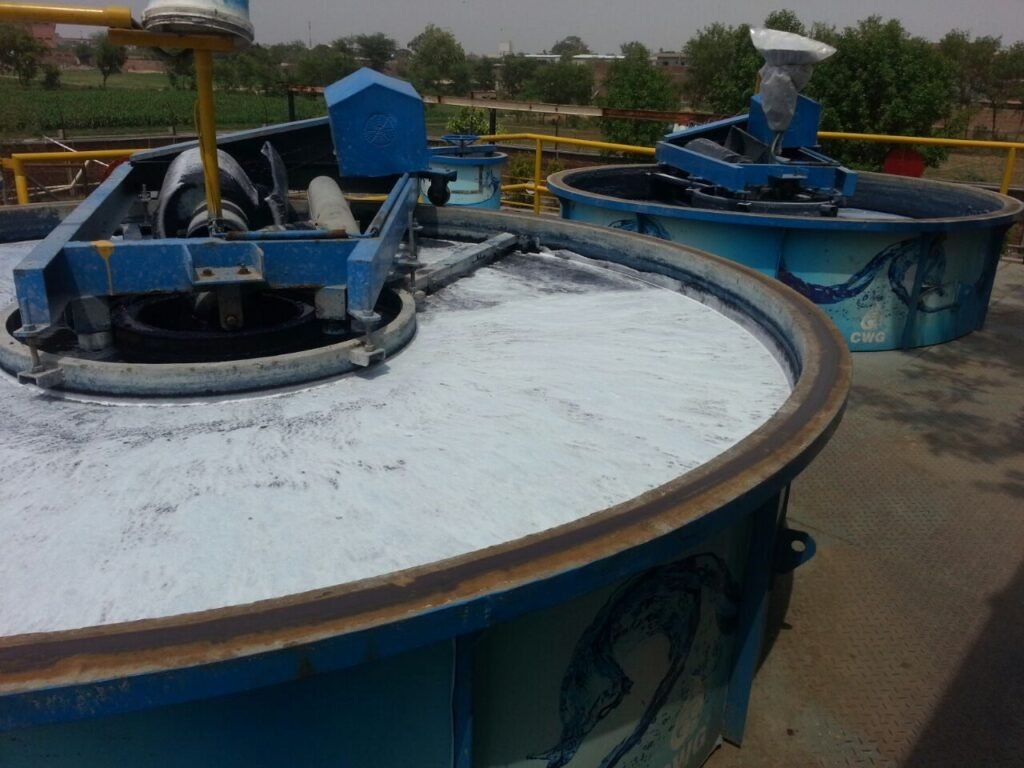
CWG has extensive experience in Dissolved Air Flotation. Fine air bubbles are introduced into the wastewater, attach to suspended contaminants and carry them to the surface where the floated sludge is removed — separating material that is difficult to settle by gravity, including:
DAF can serve as primary treatment, pretreatment before biological systems or MBBR, treatment before MBR, a polishing / solids-removal stage, or part of a complete industrial ETP. Its effectiveness depends on correct process design, chemical conditioning, hydraulic loading, air saturation, sludge removal and integration with the rest of the plant.
CWG designs complete industrial Effluent Treatment Plants for facilities that need reliable treatment of process wastewater. Depending on the effluent, the ETP can combine several treatment stages:
Screening removes larger material; equalization balances flow and concentration for stable downstream conditions.
pH correction, coagulation, flocculation, DAF, Deck Float, clarification, sedimentation and electrocoagulation.
MBBR, Turbo Bio-Reactor, MBR, SBR, RBC, activated-sludge and hybrid biological systems.
Multimedia and activated-carbon filtration, ultrafiltration, disinfection and membrane treatment.
Ultrafiltration, Reverse Osmosis and additional polishing for wastewater reuse.
Every stage engineered to work as one system — matched to the wastewater, not forced into a standard design.
CWG also designs and supplies Sewage Treatment Plants for domestic and commercial wastewater — for hotels, hospitals, housing developments, commercial buildings, educational institutions, industrial facilities, offices, townships and labour colonies.
Depending on site requirements, STP systems can be designed as:
Treated water can undergo additional polishing for suitable non-potable reuse applications.
MBR combines biological treatment with membrane separation to produce high-quality treated water within a compact footprint. Instead of relying entirely on settling to separate biomass, membranes provide a physical separation barrier.
MBR can be particularly useful when:
Because MBR performance depends heavily on membrane condition, effective pretreatment and solids removal are extremely important — another reason advanced DAF and Deck Float are valuable parts of the complete process.
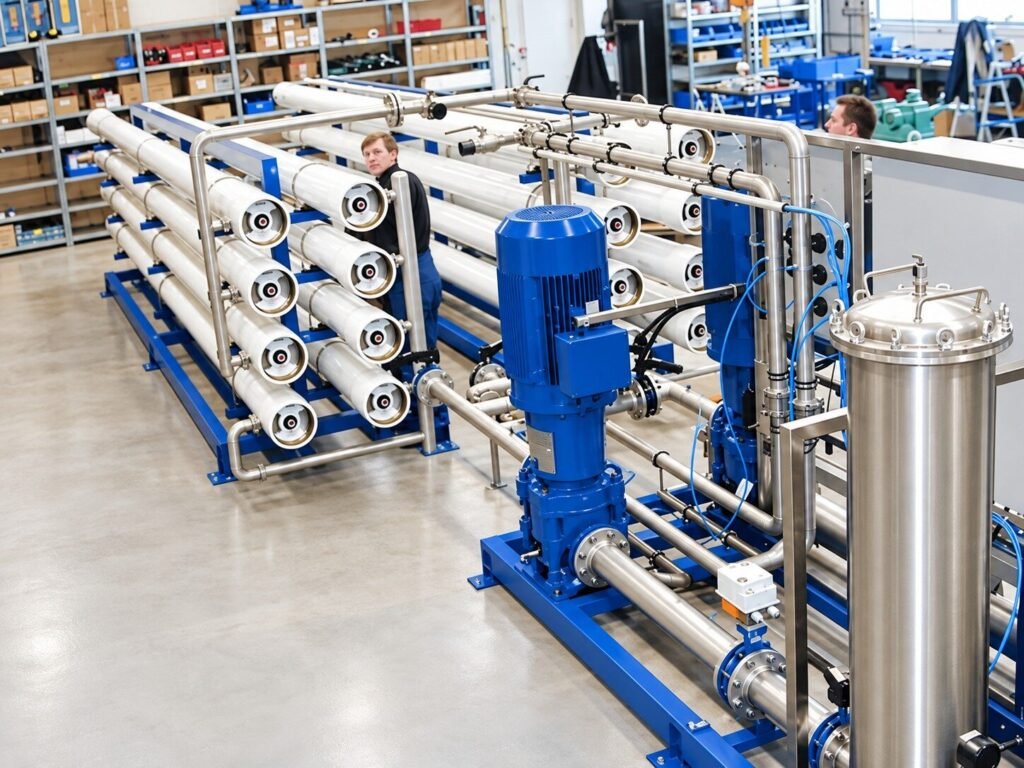
With the correct treatment process, wastewater becomes a recoverable water resource. CWG integrates biological treatment, advanced clarification, filtration, Ultrafiltration and Reverse Osmosis into complete recycling systems. A typical concept may include:
Wastewater recycling helps industries reduce freshwater consumption and discharge, lower dependence on external supplies, recover valuable process water and improve long-term water security.
For facilities seeking very high water recovery, CWG develops Zero Liquid Discharge solutions. ZLD is not one machine — it is a complete strategy that progressively recovers usable water while concentrating the remaining dissolved contaminants. A ZLD train can include:
The correct ZLD system must be engineered according to wastewater chemistry, flow and the required recovery target.
Wastewater treatment also produces sludge, which can create operational problems if not handled properly. CWG integrates sludge-management and dewatering equipment:
Reducing the water content of sludge lowers its overall volume and makes subsequent handling more practical.
Colour, dyes, solids, salts and process chemicals — treated with equalization, DAF / Deck Float, MBBR / TBR, filtration and membrane recovery.
High biodegradable organic loading with fats, oils and grease — pretreatment plus biological treatment keep performance stable.
Streams vary greatly by process — treatment is based on actual wastewater analysis rather than assumptions.
Combinations of solids, high organic load and chemicals requiring both physical-chemical and biological treatment.
Sewage and decentralized systems for buildings, institutions and residential developments, treated close to the source.
Across every sector, treated water can be recovered for reuse with UF, RO and polishing stages.
CWG has worked with major textile and apparel organizations including Style Textile, US Apparel, Renfro Crescent Textile, Crescent Bahuman, Kay & Emms, Proline and other industrial facilities.
Wastewater treatment should be evaluated on real operating experience, not only equipment brochures. CWG has delivered wastewater treatment systems — including DAF, biological treatment and combined configurations at a wide range of capacities — for major industrial organizations:
Real operating experience matters because wastewater conditions change. A wastewater treatment company must understand not only how individual technologies work on paper, but how the complete system behaves during actual plant operation.
CWG has been working in water and wastewater treatment since 1998. What makes CWG different is the combination of engineering capability, technology and practical, hands-on experience.
A core biological technology for both new plants and appropriate upgrades to existing systems.
DAF experience combined with Deck Float / DEK-FLOAT and third-generation flotation technology.
We identify problems in existing systems and determine how they can be repaired, optimized or expanded.
Experience across filtration, UF, RO, recycling and high-recovery systems.
Analysis, design, fabrication, installation, commissioning, operator support and after-sales service.
The objective is a complete treatment solution — not simply supplying equipment.
If you are planning a new wastewater treatment plant, CWG develops the process around your flow, analysis, site conditions and required outlet quality. If you already have a plant that is not meeting outlet quality, is unstable, overloaded, using too much power or chemicals, producing excess sludge, fouling membranes or struggling with solids removal — the answer may not be to replace everything.
CWG specializes in diagnosing, fixing and upgrading existing wastewater treatment plants.
We examine the complete process, determine where the real problem exists and build the improvement around that bottleneck. The solution may be a single change or a combination:
The solution depends on the wastewater and the existing plant — not on selling one particular technology.
What is a wastewater treatment plant?
It removes contaminants from used water so the treated water can be discharged or reused, using physical, chemical, biological, filtration and membrane processes.
What is an Effluent Treatment Plant (ETP)?
An ETP treats industrial wastewater from manufacturing and production. Because industrial wastewater varies greatly, the system should be designed around the actual effluent.
What is the difference between an ETP and an STP?
An ETP generally treats industrial effluent, while an STP primarily treats domestic or sanitary sewage.
Does CWG specialize in MBBR?
Yes — CWG is a specialist in MBBR wastewater treatment, including new MBBR plants and appropriate upgrades to existing systems.
Can CWG fix an existing wastewater treatment plant?
Yes. Upgrading and fixing existing systems is one of our key areas of expertise — we inspect the process, identify bottlenecks and improve the biological, chemical, clarification, membrane, aeration or sludge stages.
What is Deck Float?
Deck Float / DEK-FLOAT is an advanced clarification approach combining flotation and sedimentation, positioned before biological or membrane stages to reduce downstream loading.
What is DAF?
Dissolved Air Flotation uses fine air bubbles to float suspended solids, fats, oils, grease and other difficult-to-settle contaminants to the surface for removal.
Can wastewater be treated for reuse?
Yes. Depending on quality and the required final use, treatment can be followed by filtration, UF, RO, disinfection and additional polishing.
Can an existing plant be converted to MBBR?
In suitable applications existing biological tanks can be evaluated for MBBR conversion or upgrading, depending on tank configuration, loading and required capacity.
Does CWG provide containerized plants?
Yes — compact, packaged, skid-mounted and containerized treatment systems can be provided where appropriate.
Which wastewater-treatment technology is best?
There is no single best technology for every stream. MBBR may suit one facility, MBR another, and some depend heavily on DAF or Deck Float. The right process is selected from the actual wastewater and required result.
Whether you need a completely new wastewater treatment plant or want to improve an existing system, CWG can engineer the right treatment process around your facility. Send us your wastewater analysis, flow rate and required treated-water quality.
MBBR · ETP · STP · Deck Float · Advanced DAF · MBR · SBR · RBC · Turbo Bio-Reactor · Recycling · UF · RO · Sludge Dewatering · ZLD · Plant Upgrades