Advanced DAF clarification for industrial & municipal wastewater — featuring DEK FLOAT and TURBO FLOAT systems for efficient removal of suspended solids, fats, oils and grease.










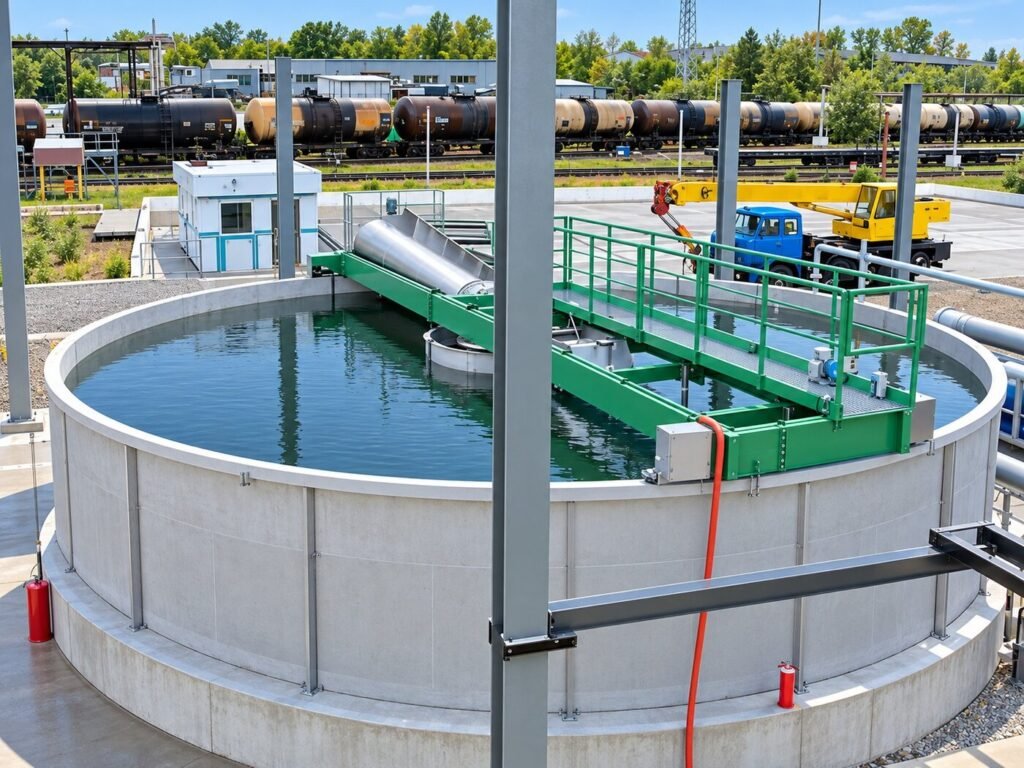
Dissolved Air Flotation (DAF) is an advanced and highly efficient wastewater clarification technology widely used for industrial and municipal wastewater treatment. It removes suspended solids, fats, oils, grease and other separable contaminants, producing clarified water suitable for further treatment.
The process works by dissolving air into water under pressure and releasing it into the flotation tank, generating fine microbubbles. These bubbles attach to suspended particles, causing them to rise to the surface, where the accumulated sludge is mechanically removed.
Modern high-rate DAF clarifiers offer rapid separation, compact design, reduced space requirements and efficient solids removal. In suitable applications, advanced DAF systems with detention times of approximately 3–5 minutes can replace conventional sedimentation clarifiers requiring 2–3 hours, providing faster clarification and improved separation of lightweight, difficult-to-settle particles.
Advancements in DAF technology have significantly improved hydraulic loading capacity and treatment efficiency. Reported hydraulic loading rates have increased from 1 L/m²·s to 2.5 L/m²·s, reaching up to 7.5 L/m²·s in triple-stacked configurations. Modern high-rate designs have reduced detention times from approximately 30 minutes to as little as 3 minutes, while improvements in air dissolution have reduced air-mixing tube retention times from 60 seconds to approximately 10 seconds in certain designs.
The smaller size and lighter construction of modern DAF units allow economical fabrication, simplified installation and greater flexibility through prefabricated systems. Combined with effective coagulation and flocculation chemicals, these advanced clarifiers provide stable operation, high clarification efficiency and optimized solids separation.
DAF clarifiers are widely used in pulp and paper mills, textile industries, sugar mills, dairies, food processing facilities, oil refineries, tanneries and other industrial applications, including paper mill backwater treatment, oily wastewater clarification and industrial effluent treatment.
The stated detention times and hydraulic loading rates represent reported technological advancements and selected high-rate designs. Actual operating parameters depend on wastewater characteristics, system configuration and engineering requirements.
Two main DAF clarification systems — DEK FLOAT and TURBO FLOAT — each designed for specific wastewater separation requirements.
Combines Dissolved Air Flotation and gravity sedimentation in one unit — separating both floatable and settleable solids simultaneously.
A high-efficiency clarifier that relies exclusively on dissolved air flotation — ideal for lightweight and oily contaminants.
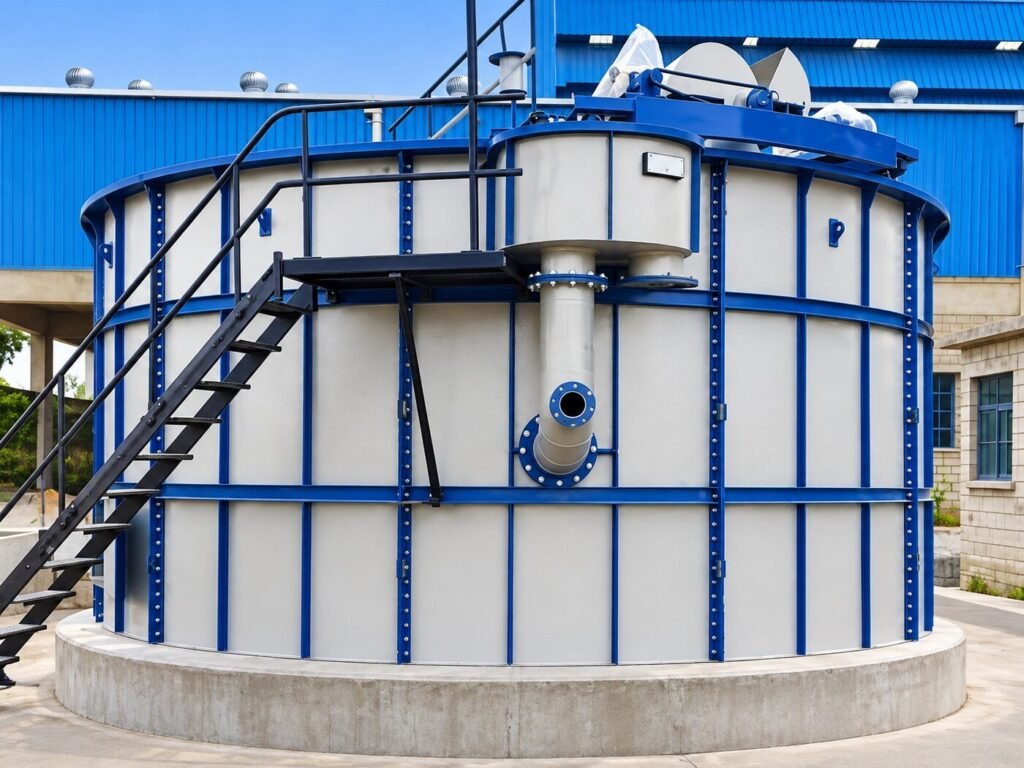
DEK FLOAT is a durable, mechanically simple and highly efficient wastewater clarification system that combines Dissolved Air Flotation (DAF) and conventional gravity sedimentation within a single integrated unit.
Unlike conventional DAF systems that primarily rely on flotation, DEK FLOAT simultaneously separates both floatable and settleable solids from wastewater — providing improved clarification, reduced suspended solids and more consistent water quality for downstream treatment.
Based on three principles: Henry’s Law, Microbubble Nucleation and the Zero Velocity Principle.
Air dissolved under pressure is released to form fine 10–100 micron microbubbles that attach to solids, FOG and flocs and carry them to the surface for skimming.
Fine bubbles attach to suspended and flocculated particles, increasing buoyancy and improving flotation of lighter contaminants.
A low-turbulence settling zone lets heavier particles settle; a mechanical bottom scraper collects the sludge into a sump for removal.
By integrating flotation and sedimentation into a single system, DEK FLOAT improves the separation of contaminants with different settling characteristics while reducing the suspended-solids load on subsequent treatment processes.
Primary DEK FLOAT — installed before biological treatment, it removes suspended and colloidal contaminants through flotation, sedimentation and (where required) coagulation/flocculation. It improves colour removal, reduces particulate COD and turbidity, and lowers the solids load entering MBBR and other biological systems.
Secondary DEK FLOAT — installed after biological treatment, it separates biological sludge and remaining solids, improving clarity, reducing residual BOD/COD, and protecting downstream filtration, UF and RO systems from excessive solids loading.
Indicative values from a specific technical proposal. Actual performance depends on wastewater characteristics, chemical conditioning, hydraulic loading and operating conditions.
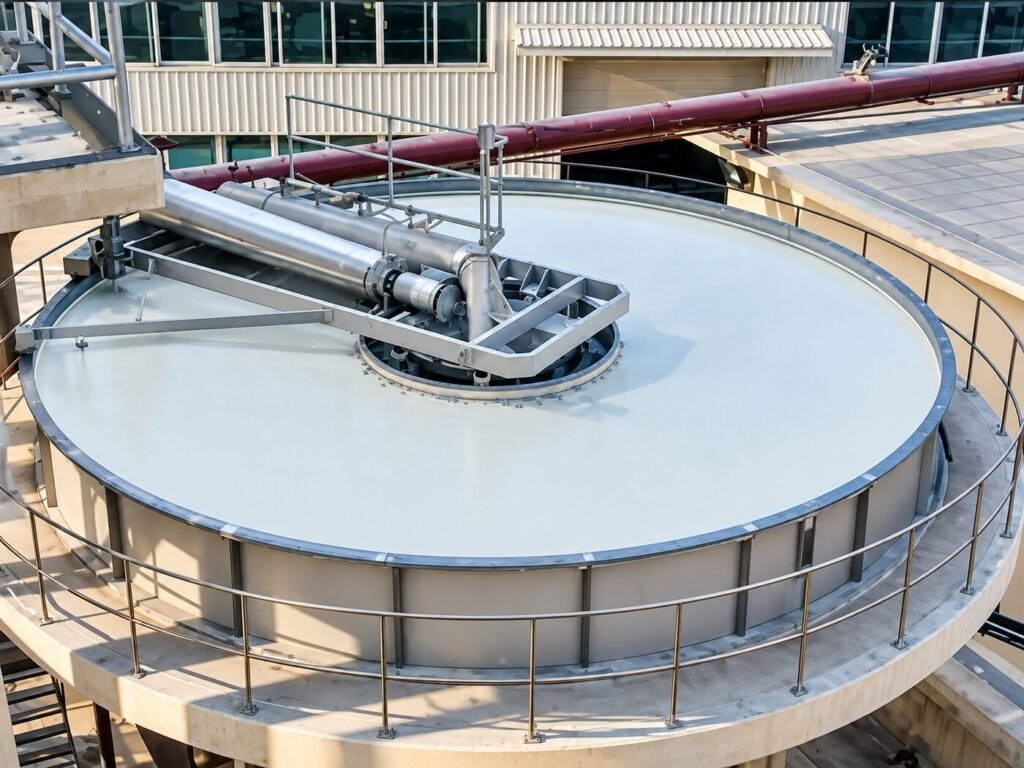
TURBO FLOAT is a high-efficiency Dissolved Air Flotation clarifier designed for effective separation and removal of suspended solids, fats, oils, grease and other floatable contaminants from industrial wastewater.
The system operates entirely on Dissolved Air Flotation technology. Air is dissolved into water under pressure; upon release, fine microbubbles disperse through the wastewater, attach to suspended particles and raise them to the surface, where the floated sludge is mechanically collected. Clarified water is collected for subsequent treatment or reuse.
Unlike DEK FLOAT, TURBO FLOAT relies exclusively on dissolved air flotation for clarification.
It is particularly suitable for wastewater containing lightweight suspended particles, emulsified or dispersed oily contaminants, and solids that are difficult to remove through conventional gravity settling — and can be integrated into effluent treatment plants as a primary clarification or pretreatment system.
Send us your wastewater analysis and flow rate and we’ll recommend the right DEK FLOAT or TURBO FLOAT configuration for your plant.